An Aegean table is not built around a main course — it is built around meze. The short answer: you open with cold meze (fava, haydari, hummus), move to the hot ones in the middle (wild greens, crispy courgette, saganaki), and the shift between the two sets the rhythm of the evening. Below are the ten most-ordered plates in our garden: what each one is, how it is eaten, and what it goes with.
The word meze comes from Persian and means “taste”. In the Aegean its job is not to fill you up but to start the conversation: small plates arrive in the middle, everyone breaks the same bread, nobody is in a hurry. That is why meze is ordered by the table, not by the person.
Cold meze — how the table opens
1. Fava
A purée of dried broad beans. Good fava is creamy but you can still feel the grain; it comes with olive oil, dill and plenty of lemon. Tekmil fava is the enriched version, served with fried onion and dill on top. It is the most cooling plate on an Aegean table — the first thing to order on a hot afternoon.
2. Haydari
Strained yoghurt, garlic and fresh mint. If there is anything grilled on the table, haydari is essential: the acidity of the yoghurt cuts through the fat of the meat. You can tell instantly when fresh mint has been used instead of dried.
3. Hummus
Chickpeas, tahini, lemon, garlic. Aegean hummus is usually more lemony and looser than the Levantine version. Warm versions exist, but the classic is served cold.
4. Atom
Yoghurt, fried hot pepper and butter. It takes its name from the heat. The pumpkin version balances that heat with sweetness — the right starting point for guests who are wary of chilli.
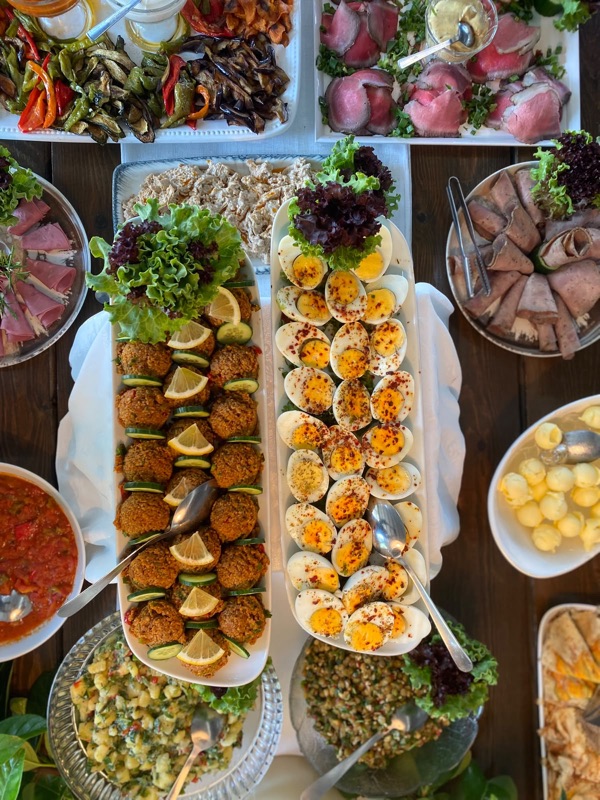
5. Carrot Tarator
Grated carrot turned in oil, with strained yoghurt and garlic. Sweet and soft, it is the plate that balances the spicier meze. A fixture on tables with children.
6. Beetroot with Green Apple
When green apple joins the classic pairing of boiled beetroot and yoghurt, the result is a sweet-sharp freshness. Its colour also makes it the best-looking plate on the table.
Hot meze — the second act
7. Wild Greens (Ot Kavurma)
The plate that makes the Aegean the Aegean. Depending on the season it is dandelion, blessed thistle, radish greens or nettle, lightly turned in olive oil and served with lemon. These greens are not found on a supermarket shelf but in a field and in season — which is why this is never quite the same plate twice.
8. Crispy Courgette
Thinly sliced courgette, lightly floured and fried, usually served with garlic yoghurt. Done properly it does not soak up oil and crackles like a crisp. It is always the first plate to empty.
9. Saganaki
Cheese melted in a pan. Loved on both shores of the Aegean, it stretches when you pull at it with a spoon while hot, and takes a squeeze of lemon. Of all the meze, this is the easiest to pair with wine.
10. Mushrooms with Kaşar
Baked mushrooms with melted kaşar cheese — the most filling member of the meze table. Think of it as the bridge to the main course: whatever grill follows will feel lighter for it.
How to build a meze table
- 1.5 plates per person — six meze for a table of four, two of them hot.
- Cold ones first — all at once, so the table is laid in a single move.
- Hot ones in between — order them when the cold plates are half gone; the table comes alive twice.
- Keep the bread fresh — at a meze table bread matters as much as the fork.
How much does meze cost?
On an Aegean table, meze is not a starter that arrives before the main course — it is the meal. Which is why most of the bill is made there. The bands below come from the current menu at Seçkin Saklı Bahçe and give a fair idea of the price level in the area.
| Group | Price | Examples |
|---|---|---|
| Classic cold meze | ₺320 – 350 | Fava, haydari, hummus, atom, şakşuka, smoked aubergine, dried cacık |
| A little more work | ₺325 – 395 | Roasted pepper with tarator, piyaz with tahini, Cretan meze, vine leaves, artichoke |
| From the sea | ₺450 – 900 | Salted anchovy, lakerda, taramasalata, smoked salmon, octopus salad |
| Carpaccio and selections | ₺950 – 975 | Chef's cold meze platter, beef carpaccio, octopus carpaccio |
| Hot meze | ₺325 – 1100 | Saganaki, crisp courgette, herb sauté, grilled calamari, slow-cooked octopus |
These are current menu prices and can change with the season; see the menu page for exact figures.
How many meze for how many people?
The most common mistake is everyone ordering their own. Meze is shared, and the number depends on how long you want the table to last, not on how many of you there are. A practical guide:
- Two people: three cold and one hot. That is enough if a main course is coming. Sticking to the classics puts the table at around ₺1,400.
- Four people: five cold and two hot. One plate from the sea — lakerda or salted anchovy — changes the character of the whole table.
- Six or more: the chef's cold platter (₺950) brings six to eight cold meze on its own; two or three hot plates on top is plenty. Faster than ordering one by one, and better balanced.
Seasonal meze: what to expect, and when
Anything marked seasonal on the menu is there only while that herb or vegetable is being picked locally. This is the most Aegean thing about the cuisine: the same restaurant shows a different meze list in April and in October.
- Spring: artichoke, stuffed courgette blossom, boiled wild herbs, purslane. Sea beans are at their best now too.
- Summer: green black-eyed peas, olive-oil dishes, dried cacık, şakşuka — everything that does not sit heavily in the heat.
- Autumn and winter: pumpkin atom, dried black-eyed peas, piyaz and Cretan meze come forward — the more filling end of the list.
If there is one you particularly want, it is worth asking when you book; seasonal plates do not reach the kitchen every day.
For vegan and vegetarian guests
The meze table is where a vegan guest has the easiest time, because the Aegean olive-oil tradition is already largely plant-based. Marked vegan on the menu are fava, hummus and sea beans. Add vine leaves, smoked aubergine, şakşuka, dried black-eyed peas and boiled herbs in olive oil, and you have a complete table that needed no adaptation at all.
For vegetarians who eat dairy, haydari, atom, Cretan meze, saganaki and mushrooms with kaşar join in. If you want a main course as well, the falafel and the olive-oil home cooking in the vegan section are there for that.
What to drink with meze: rakı or wine?
The classic answer is rakı, and the reason is not sentimental: the sharpness of anise clears the film that olive oil leaves in the mouth and resets the palate for the next bite. With white cheese, melon, lakerda and salted anchovy the effect is unmistakable. The menu lists rakı by the single, the double and the bottle.
On the wine side there is one rule: acidity. Put a round, faintly sweet white next to lemon-and-olive-oil plates and both go flat. Red, white and rosé are all available by the glass; our wine pairing guide goes through which one actually works with which plate.
The rest of the meze list
The ten above are the best known. But the real breadth of an Aegean table hides in the names you have not seen before. Some of the others on the menu:
- Topik — chickpea and potato purée wrapped around cinnamon-spiced onion, from Armenian cooking. Faintly sweet, and eaten on its own.
- Cretan meze — walnut and lor cheese. Dense, salty and filling; one of the most requested plates alongside rakı.
- Lakerda — bonito cured in salt, served with olive oil and onion. The most classic meyhane plate of the Aegean and Marmara. A dish of lakerda on the table means the evening is going to run long.
- Taramasalata — cured fish roe, known by its pink colour and creamy texture, balanced with lemon.
- Salted anchovy — anchovy cured in vinegar and salt. Not cooked, but not raw either; the acid does the cooking.
- Stuffed mussels — sold by the piece. Mussels filled with spiced rice; never eaten without squeezing lemon over them first.
- Crisp pepper and roasted pepper with tarator — the same vegetable in two states: one sharp and crunchy, the other charred and soft.
- Piyaz with tahini — in the Aegean, piyaz is made with tahini rather than mayonnaise. It sounds like a small difference; it changes the plate completely.
- Beef and octopus carpaccio — the two most finely sliced plates on the menu. Carpaccio is an Italian technique, but made with octopus it becomes something entirely Aegean.
- Purslane in yoghurt and boiled wild herbs — this is where the Aegean herb culture lives. Purslane, chicory, radish leaves; it changes with the season.
Five common mistakes at a meze table
- Everyone ordering their own. Meze is shared. Ordering per person costs more and breaks the table.
- Ordering the hot plates first. They all arrive at once and go cold. Ask for them as the cold plates run down.
- Finishing the bread early. The oil left in the plate at the end of an olive-oil meze is what the bread is actually for.
- Asking for the main course at the same time. A meze table is a course in its own right; at least forty minutes should pass before the main arrives.
- Choosing everything from one family. Five yoghurt-based plates is not a table. One yoghurt, one olive-oil, one pulse, one from the sea, one hot — that is the balance.
Frequently Asked
How many meze per person should I order?
Do cold or hot meze come first?
Is Aegean meze vegetarian?
Are wild greens available all year?
Keep Reading
Pairing Wine with Aegean Food: A Practical GuideChoosing wine for an Aegean table How to Plan a Romantic Dinner in KuşadasıSunset table, music and celebration planning Aegean Menu & PricesMezes, seafood and signature dishes, with current prices Seçkin Saklı BahçeOn Ladies Beach since 1975: sunset, live music, reservationsSet the meze table facing the sea
Book a table for an evening that opens with cold meze and carries on with the hot ones.
Book a Table