There is really only one rule at an Aegean table: the more olive oil and lemon in the dish, the more acidity you want in the glass. The short answer: dry white for meze and seafood, medium-bodied red for the grill, and rosé for everything in between. Below is how that rule plays out, in the order the table arrives.
One caveat first: pairing rules exist to make things easier, not to spoil the evening. A wine you love is the right wine even when it pairs "wrong". What follows is a compass for when you are undecided.
The meze table · it wants acidity
Fava, haydari, hummus, wild greens — what they share is olive oil and lemon. Put a full-bodied, oaked white next to that table and the wine flattens the food. What you want is fresh, dry and high in acidity.
- Bornova Misketi — İzmir's own grape. Aromatic and floral; it stands up to the garlic and mint in the meze.
- Sultaniye — the Aegean's common white, light and neutral; it never tires the table.
- Narince — a more structured white, useful once you move to hot meze and cheese plates.
Seafood · white, but which one?
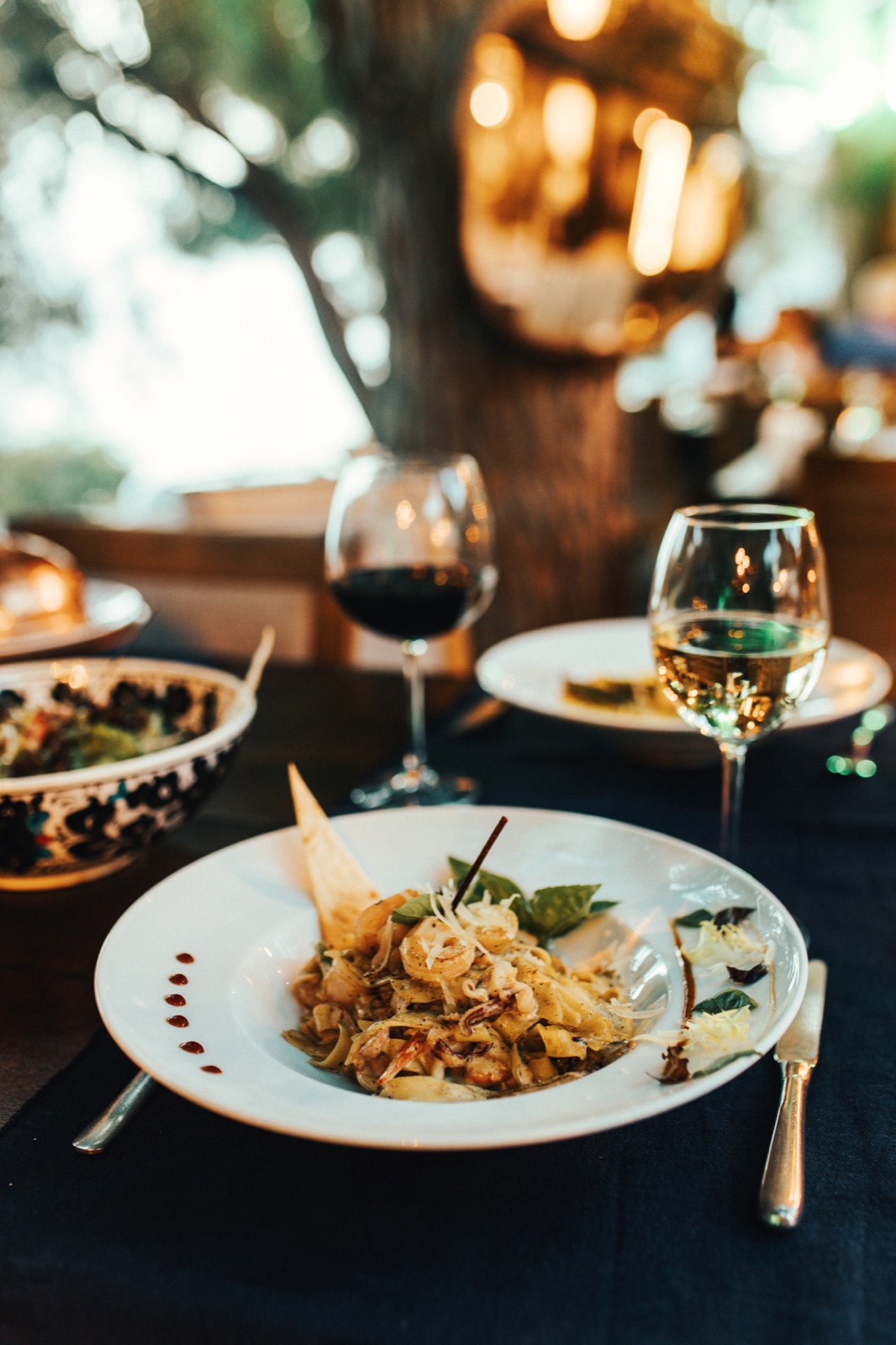
For lean white-fleshed fish such as grilled sea bass, a dry and sharp white is the right call. The oilier the fish, the more body the wine can carry. For saffron-scented, mixed dishes such as seafood paella, rosé does a better job than white: it has the acidity and it can carry several different proteins on its own.
The grill · the turn of red
Grilled köfte, kebab, fillet — here you want tannin to cut the fat. But on an Aegean summer evening a heavy, high-alcohol red is exhausting. Medium-bodied reds with open fruit work better:
- Kalecik Karası — soft tannins, cherry notes; it even works with grilled chicken.
- Öküzgözü — lively acidity and plenty of fruit; the classic partner for kebab and spiced meat.
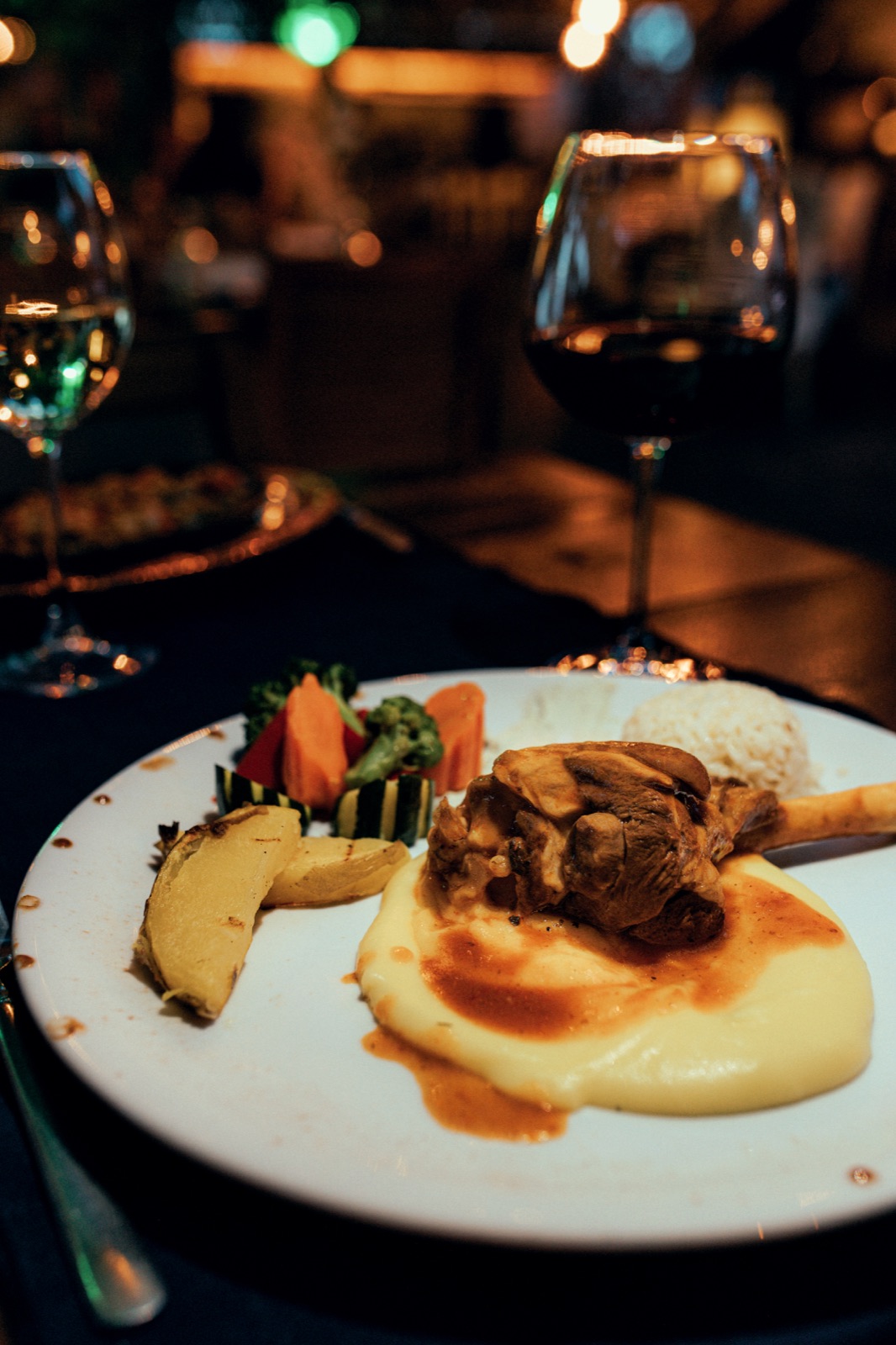
- Boğazkere blends — more tannic and powerful, for slow-cooked meat such as lamb shank or beef cheek.
Vegetarian and olive-oil dishes
For olive-oil dishes, grilled vegetables and falafel there is no need to reach for red. Dry rosé is the most flexible choice here: it handles both the sweetness of the vegetables and the bitterness of the greens.
Dessert · where most mistakes happen
The rule is simple: the wine must be sweeter than the dessert. Put a dry wine next to kazandibi or baked helva and the wine will taste sour. Either choose a sweet wine, or finish the dessert with coffee and leave the wine with the main course. Fruit-led, acidic desserts such as pavlova are where this rule is most forgiving.
By the glass or by the bottle?
For a table of fewer than three with several different dishes, glasses are smarter: white with the meze, red with the grill. From four people up, a bottle is both better value and better suited to the table. We pour both; just ask at the table which grapes are open that week — the list moves with the season.
Real plates, real pairings
Rather than memorising rules, it is easier to work through the dishes you will actually order. The pairings below are written for the plates on the Seçkin Saklı Bahçe menu, but the logic holds in any Aegean restaurant.
| Dish | What to order | Why |
|---|---|---|
| Grilled sea bass | Dry white | Acidity balances the salt; an oaked white flattens the fish |
| Slow-cooked octopus | White or rosé | Long cooking brings sweetness, which rosé fruit meets well |
| Seafood paella | Rosé | Saffron plus shellfish: white is too light, red too heavy |
| Fried calamari | Dry white, high acid | Only acidity cuts through frying oil |
| Fillet steak | Medium to full red | Fat meets tannin and both soften |
| Lamb shank | Full red | Slow-cooked lamb walks straight over a light red |
| Saklı Bahçe kebab | Red with soft tannin | Spice collides with tannin; a hard red pushes the heat forward |
| Olive-oil dishes, meze | White or rosé | Lemon and olive oil want acidity; sweetish whites go flat |
What comes from Turkish vineyards
There is no need to look for imported wine at an Aegean table; the region's own grapes grew up alongside this food. The bottle list on the menu is made up of Turkish producers — Arkas, Sarafin, Prodom and Kavaklıdere among them — with the Aegean and Thrace regions to the fore.
If you want to try native grapes, narince and emir in white, öküzgözü and boğazkere in red are the ones with real character. Narince with seafood and öküzgözü with red meat are generally safe choices. And if describing what you want is easier than reading a list — "something white with good acidity", "nothing too tannic" — simply say so to the floor team.
By the glass or by the bottle? A quick calculation
On the menu, wine by the glass runs ₺550–650 and bottles start at ₺2,000. A standard bottle pours five glasses. So:
- Two people, one glass each: order by the glass. No reason to open a bottle.
- Two people, two glasses each: four glasses is roughly ₺2,200–2,600. At that point a bottle is both cheaper and better, because the bottle list is wider than the by-the-glass list.
- If you are eating different things: one of you having fish and the other steak makes two separate glasses more sensible than one shared bottle. Pairing beats saving.
Rakı: the Aegean's own pairing
Wine pairing is a European habit; this table's own answer is rakı. Anise clears the film olive oil leaves in the mouth and resets the palate for the next bite. That is why, at a meze table, rakı is considered the more "correct" choice.
The menu carries Yeni Rakı, Tekirdağ, Efe Gold and Beylerbeyi, served by the single, the double and the bottle. The classic ratio is one to two — one measure of rakı to two of water — though it varies by taste. Ice goes in after the water, not before: add ice first and the anise oils drop out, leaving the drink harsh instead of cloudy.
At a rakı table a main course is usually unnecessary. Meze, one hot plate and a grilled fish somewhere in the middle is enough; our meze guide walks through how the table is built.
Serving temperature: the detail most often missed
A good wine served at the wrong temperature drinks worse than an ordinary wine at the right one. In the Aegean this matters more than usual, because on a summer evening the air changes the wine in the glass quickly.
| Type | Temperature | What that means in practice |
|---|---|---|
| White and rosé | 8 – 12 °C | Straight from the fridge; keep it in a bucket |
| Light red | 13 – 16 °C | Cool cellar temperature; in summer, 20 minutes in the fridge helps |
| Full red | 16 – 18 °C | NOT room temperature — a room in the Aegean can be 28 °C |
The "serve red at room temperature" rule comes from northern Europe, where an average room is 16–18 °C. On a July evening in an Aegean garden that rule does not hold: red wine needs cooling slightly too, or the alcohol comes forward and the wine becomes tiring to drink.
What to say when you do not know the wine list
You do not have to read the list and decide from grape names and producers. Describing what you want to the floor team usually gets a better result. Sentences that work:
- "Something dry and white with good acidity." Points in the right direction for seafood and meze.
- "Nothing too tannic." The clearest way to say you dislike that drying grip.
- "No oak, please." If you do not want vanilla and butter notes.
- "What goes with this dish?" The simplest and most effective question. Whoever knows the menu also knows the sauce and the cooking method.
- "My budget is around this much." The piece of information people are shyest about and that helps most. Name a band and the recommendation comes from inside it.
What happens to a bottle you do not finish?
You can take an opened, unfinished bottle with you; this is legal in Türkiye and most restaurants will re-cork it for you. There is no need to feel awkward asking.
How long the rest lasts at home: a stoppered white keeps 2–3 days in the fridge, a red 2–3 days somewhere cool. What decides it is how much air is in the bottle — a half bottle lasts longer than a quarter.
Frequently Asked
What wine goes with a meze table?
Can I drink red wine with fish?
What wine goes with dessert?
Glass or bottle?
Keep Reading
10 Aegean Meze You Should Not Skip10 essential mezes and their stories How to Plan a Romantic Dinner in KuşadasıSunset table, music and celebration planning Aegean Menu & PricesMezes, seafood and signature dishes, with current prices Seçkin Saklı BahçeOn Ladies Beach since 1975: sunset, live music, reservationsRaise the glass to the view
Let's talk pairings at the table and suggest something for what you have ordered.
Book a Table